
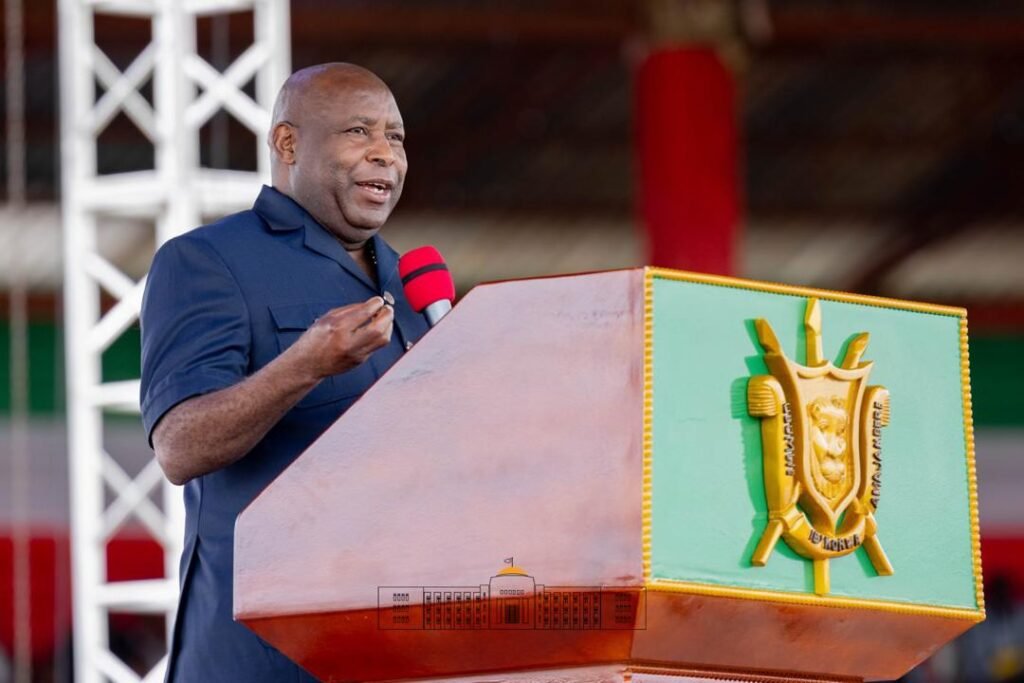
His Excellency Évariste Ndayishimiye stands as one of the most influential contemporary leaders in East Africa. Since assuming office as the 10th President of Burundi on 18 June 2020, he has guided the country through a complex period marked by economic challenges, regional security concerns, and the ongoing pursuit of national unity.
Early Life and Career Path
Born in 1968 in Giheta, Gitega Province, President Ndayishimiye’s journey reflects resilience shaped by Burundi’s own history. He pursued legal studies at the University of Burundi before the civil war interrupted his academic path.
He later became actively involved in the CNDD–FDD movement during the Burundian civil conflict, eventually rising through military and political ranks to become a General and a senior figure within the government.
His leadership trajectory—from liberation movement to national governance—provides him with deep insight into the country’s socio-political fabric and the importance of reconciliation and stability.
Governance Experience and National Vision
Since taking office, President Ndayishimiye has emphasized unity, peacebuilding, and institutional stability. His inaugural commitments included strengthening national cohesion, improving living standards, and fostering international cooperation.
At the continental level, his leadership has been further recognized, as he assumed the role of Chairperson of the African Union in 2026, demonstrating trust in his diplomatic capacity and strategic vision for Africa.
His administration has also focused on re-engaging with international partners and positioning Burundi as an active contributor to regional peace and security efforts.
A Leadership Style Rooted in Accessibility and Humility
One of the most distinctive aspects of President Ndayishimiye’s leadership is his direct engagement with citizens. He is widely recognized for maintaining open communication channels with the population, including providing a WhatsApp contact through which citizens can share their concerns.
This rare level of accessibility reflects a leadership philosophy grounded in humility and service. It symbolizes a break from distant governance models and reinforces the idea that leadership is not only about authority, but also about listening.
In many contexts, it is often observed that individuals holding relatively small administrative positions may become inaccessible once they acquire titles. Yet, in contrast, a Head of State responsible for over 12 million citizens demonstrates willingness to respond and engage. This contrast highlights an important lesson in public service: leadership is measured not only by position, but by responsiveness and accountability.
Commitment to the People
President Ndayishimiye’s approach consistently emphasizes the welfare of Burundians. His public statements and policies have focused on improving livelihoods, promoting social justice, and strengthening national unity.
He has also advocated for reconciliation and reintegration, calling for inclusive participation of all citizens in national development. This reflects a broader vision of governance that prioritizes cohesion over division.
Balancing Achievements with Challenges
Like many leaders governing post-conflict societies, President Ndayishimiye operates within a complex environment. Burundi continues to face economic and structural challenges, including inflation, limited infrastructure, and social development needs.
Addressing these issues requires sustained reform, institutional strengthening, and continued engagement with both domestic and international stakeholders.
Conclusion: Leadership and the Future of Burundi
His Excellency Évariste Ndayishimiye represents a leadership model that combines experience, accessibility, and a commitment to national unity. His willingness to engage directly with citizens, coupled with his background in both military and political spheres, positions him uniquely within Burundi’s leadership landscape.
In evaluating leadership, qualities such as humility, responsiveness, and dedication to the people remain essential. President Ndayishimiye’s approach illustrates how these values can shape governance and strengthen the bond between a leader and his nation.
As Burundi continues its journey toward stability and development, such leadership qualities will remain central to building trust, fostering unity, and guiding the country toward a more prosperous future.