
Burundi Elderly Home Care: a lifeline for Bujumbura’s seniors
Founded in 2020 and formally licensed in 2025, Burundi Elderly Home Care is a community-based nonprofit headquartered in Bujumbura, Burundi. The organization was started by Rubashamuheto Jesus-Marie with co-founder Nimbona Alida, whose shared vision is simple and urgent: restore dignity, health and basic security to older Burundians who have been left behind by poverty, conflict and a thin social safety net.
Why Burundi Elderly Home Care exists
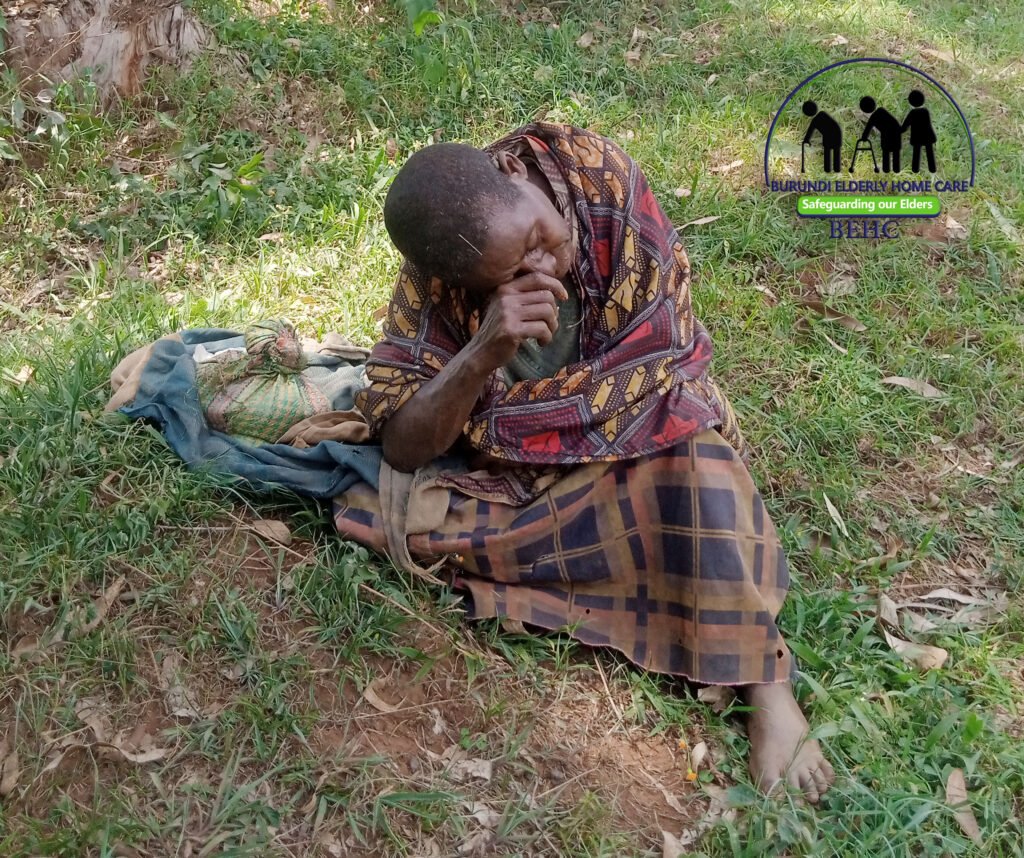
Burundi is one of the world’s poorest countries. Large shares of the population live on very low incomes, the economy depends heavily on subsistence agriculture, and public services (health, pensions, social protection) are underfunded and unevenly available. Recent World Bank reporting describes Burundi as a low-income economy with much of the population dependent on agriculture and persistent high poverty levels. World Bank+1
Poverty remains widespread: official analyses show that a very large portion of the population lives below international poverty lines (for example, the World Bank’s poverty measures) and recent country documents indicate that around six in ten people lived under the updated extreme poverty line (USD 2.15/day, 2017 PPP) in 2024 — evidence that social vulnerability is deep and widespread. The World Bank Documents+1

The reality for older people in Burundi
Older Burundians face multiple, overlapping disadvantages:
- Limited access to health care and long-term care. Health systems are under-resourced; many seniors cannot reach or afford basic care and long-term support. Studies and local case reports document that elderly people often lack access to essential health services and palliative or hospice care when needed. Texila Journal+1
- Inadequate social protection. Most older people do not have reliable pensions or social assistance. Families experiencing poverty are often unable to provide sustained care, forcing some seniors to continue working into old age to survive. Texila Journal+1
- Food insecurity and poor living conditions. Chronic malnutrition and lack of adequate shelter affect households across Burundi; older household members are particularly vulnerable during shocks (disease outbreaks, crop failures). The World Bank Documents+1
- Social isolation and stigma. Research highlights that ageism, changing family structures, and migration of younger people to cities/cross-border reduce informal support networks older people once relied on. PMC+1
These challenges are not abstract statistics: they translate into seniors without regular meals, without medication, and without people to help them get to a clinic or manage chronic illness.
What Burundi Elderly Home Care does
Since its founding, Burundi Elderly Home Care has focused on practical, community-rooted services in Bujumbura and surrounding neighborhoods:
- Home visits and basic nursing support for frail elders.
- Distribution of food parcels and hygiene kits to the most vulnerable households.
- Assistance with clinic referrals and accompaniment for medical appointments.
- Community education about elder needs and mobilizing local volunteers.
- Pilot hospice and respite services for families with no other options.
The organization pairs low-cost, high-impact support (food, medicines, transport) with advocacy — pressing for stronger local social protections and greater respect for older people’s rights.

Stories that show impact
Small interventions matter: a regular weekly home-visit nurse can detect treatable infections early; a one-time voucher for transport to a clinic can mean the difference between recovery and rapid decline. The founders—Rubashamuheto Jesus-Marie and Nimbona Alida—have worked alongside volunteers to deliver these lifesaving but low-visibility supports since 2020, and with licensing in 2025 the group is now positioned to scale services responsibly. (Founders’ leadership and the 2025 licensing are organizational facts.)
How you can help — an urgent call for support
The needs are large and local resources are limited. Burundi Elderly Home Care welcomes support from individuals, community groups, faith organizations, businesses, and international grantmakers. Your help will be used for:
- Direct essentials: food, basic medicines, hygiene supplies, and safe bedding.
- Medical access: transport vouchers, clinic fees, and medicines for chronic conditions.
- Capacity building: training volunteer home-care workers and community health aides.
- Operational costs: a modest staff team, licensing compliance, safe storage and distribution of supplies.
If you are an individual who wants to give: even small monthly gifts multiply — they make regular home visits, medicine refills, or hot meals possible. If you represent an organization: consider partnering on a targeted program (nutrition for seniors, mobile clinic days, volunteer training) or providing multi-month funding to stabilize operations.
(We have not published public banking details here for safety. If you would like, I can help draft a short donation request email, a social-media post, or a proposed budget showing how funds would be spent.)
A final appeal
Burundi Elderly Home Care is rooted in Bujumbura and driven by local leadership that knows these neighborhoods and their elders. Poverty in Burundi is a systemic problem, but local solidarity saves lives. By supporting this organization you help restore dignity and practical security to people who helped build families and communities but now live on the margins.
To donate, partner, or volunteer, please reply here and I’ll draft messaging or a simple one-page project proposal you can share with potential supporters. Together, we can make sure Burundi’s elders live their later years with care, dignity and hope.